
Editorial | Feb 06,2021



May 16 , 2026
By Hippolyte Fofack
Senegal hosted an international conference to address the escalating debt crisis and the structural asymmetries of the global financial system. Reform proposals include fast-tracking regional monetary integration and strengthening the capital base of development finance institutions to improve access to concessional lending. In this commentary provided by Project Syndicate (PS), Hippolyte Fofack, a former chief economist at the African Export-Import Bank and a Parker Fellow at the Sustainable Development Solutions Network at Columbia University, wrote that aligning debt maturities with long-term development objectives is a way to transform debt from a vulnerability into a manageable instrument.
The narrative that Africa faces a persistent debt crisis has become entrenched. Despite representing nearly one-fifth of the world's population, the continent accounts for less than three percent of global sovereign debt.
By contrast, the European Union (EU) and the United States (US) account for a much larger share (nearly 16pc and more than 34pc, respectively). Africa's average debt-to-GDP ratio, at 67pc, is markedly lower than those of Europe (88.5pc), the US (122.6pc), and Japan (236.7pc).
Nonetheless, many countries on the least-indebted and most capital-starved continent remain stuck in a debt trap. On May 12 and 13, Senegal hosted an international conference to address the country's escalating debt crisis and, crucially, one of its main drivers. The structural asymmetries are embedded in the global financial system. This flawed architecture has obstructed Africa's access to affordable and long-term capital and prevented the continent from diversifying its sources of economic growth and trade, transforming debt from a manageable development instrument into a self-perpetuating cycle of vulnerability.
In particular, the shift toward costly, short-term, market-based borrowing amid declining concessional lending has trapped African countries in cycles of indebtedness and external dependence. Constrained by fragmented monetary landscapes and underdeveloped domestic financial markets, African countries are forced to borrow in foreign currencies, mainly the US dollar. This leads to currency mismatches and exposes these countries to disorderly capital outflows and exchange-rate and interest-rate risks, especially monetary-policy shifts by the US Federal Reserve and other major central banks.
The balance-of-payments constraint associated with dollar funding creates a negative feedback loop. Exogenous economic shocks trigger capital flight to safe havens, sudden stops in financial inflows, and currency depreciation, all of which exacerbate the debt burden. Policymakers enact fiscal austerity, leading to a further slowdown in economic growth and revenue, making it even harder to service debt in the future.
Credit-rating agencies such as S&P, Fitch, and Moody's deepen the debt trap by assigning most African countries lower ratings, thereby substantially elevating their borrowing costs and limiting their market access. Sovereign bonds issued by African countries typically yield eight to 15pc, in sharp contrast to yields of one to fve percent in Europe and North America. These spreads impose high macroeconomic costs. According to the United Nations Development Programme (UNDP), credit-ratings agencies' subjective evaluations have cost African countries an estimated 74.5 billion dollars.
These additional costs help create a debt overhang. Interest payments now account for more than 20pc of government revenue in several African countries, including around 40pc in Nigeria and over 70pc in Egypt, thereby imposing considerable opportunity costs on development. Resources that could be allocated to infrastructure, industrial policy, human-capital development, and technological upgrading are instead redirected to debt servicing.
Africa is paying so much not because of the amount of debt it has accumulated, but because of how that debt is structured and perceived. For African countries, borrowing less costs more, setting unrealistic return-on-investment expectations that further undermine debt sustainability. As a result, a growing number of African countries have pursued rollovers and refinancing options, such as issuing new eurobonds, to settle maturing obligations, falling deeper into the debt trap.
This has accelerated the shift in recent decades from long-term concessional loans to short-term commercial debt. Private creditors now hold more than 40pc of Africa's external public debt, up from 17pc in 2000. Loans with shorter maturities compress repayment timelines, increase refinancing risks, and are misaligned with Africa's long-term development objectives. They also raise the risk of maturity clustering. This year, for example, African countries face a record 90 billion dollars debt wall driven by maturing eurobonds. Difficult tradeoffs will likely be necessary.
At the same time, Africa faces other economic constraints. The continent loses more than 50 billion dollars annually to illicit financial outflows through trade misinvoicing, abusive transfer pricing, and tax avoidance. The global financial system enables these leakages with secrecy jurisdictions and limited multilateral cooperation on international taxation.
The erosion of human capital and a chronic infrastructure deficit in an austerity-prone operating environment leave many African economies vulnerable to commodity shocks that drive external liabilities higher. When balance-of-payments crises invariably materialise, African governments are compelled to borrow in foreign currencies and implement adjustment programs that prioritise short-term fiscal consolidation over long-term development. (These programs' procyclical austerity measures can help stabilise public finances, but often weaken state capacity and lower potential economic growth.) Over time, this leads to repeated cycles of borrowing, crisis, and adjustment, the very definition of a debt trap.
To break the cycle of dependency and accelerate development, policymakers should redesign the global financial architecture. Aligning debt maturities with longer-term development objectives requires improving access to concessional financing, which can be achieved by strengthening the capital base of development finance institutions. At the regional level, policymakers can fast-track monetary integration and the development of deeper domestic capital markets to support long-term borrowing in local currencies and address structural mismatches between currency denomination and revenue generation.
It is also crucial to reform credit-ratings agencies' methodologies to achieve parity in access to affordable development finance, and to reduce the incidence of procyclical policies. This will not only rebuild these institutions' credibility but also promote economic growth and sustainable development. Lastly, the international community should regard fiscal consolidation and debt sustainability as being in the service of a broader goal, promoting Africa's economic development.
Far from being heavily indebted, Africa is a victim of deep-seated inequalities, underpinned by an international financial architecture that prevents structural economic transformation and perpetuates debt crises. If the world is to harness Africa's demographic dividends and unlock its growth potential, both of which are essential to maintaining financial stability worldwide, the institutions, rules, and norms of global governance should become more balanced and development-oriented.
PUBLISHED ON
May 16,2026 [ VOL
27 , NO
1359]

Editorial | Feb 06,2021
Commentaries | Aug 20,2022

Viewpoints | Oct 26,2019

Radar | Aug 04,2024
Radar | Apr 19,2026
Editorial | May 16,2026

Viewpoints | Sep 04,2021
Commentaries | Jul 20,2024
Commentaries | Jun 28,2025
Radar | Feb 25,2023

Photo Gallery | 186413 Views | May 06,2019

Photo Gallery | 176463 Views | Apr 26,2019

Photo Gallery | 172288 Views | Oct 06,2021

My Opinion | 139721 Views | Aug 14,2021




Dec 22 , 2024 . By TIZITA SHEWAFERAW
Charged with transforming colossal state-owned enterprises into modern and competitiv...

Aug 18 , 2024 . By AKSAH ITALO
Although predictable Yonas Zerihun's job in the ride-hailing service is not immune to...

Jul 28 , 2024 . By TIZITA SHEWAFERAW
Unhabitual, perhaps too many, Samuel Gebreyohannes, 38, used to occasionally enjoy a couple of beers at breakfast. However, he recently swit...

Jul 13 , 2024 . By AKSAH ITALO
Investors who rely on tractors, trucks, and field vehicles for commuting, transporting commodities, and f...
May 16 , 2026
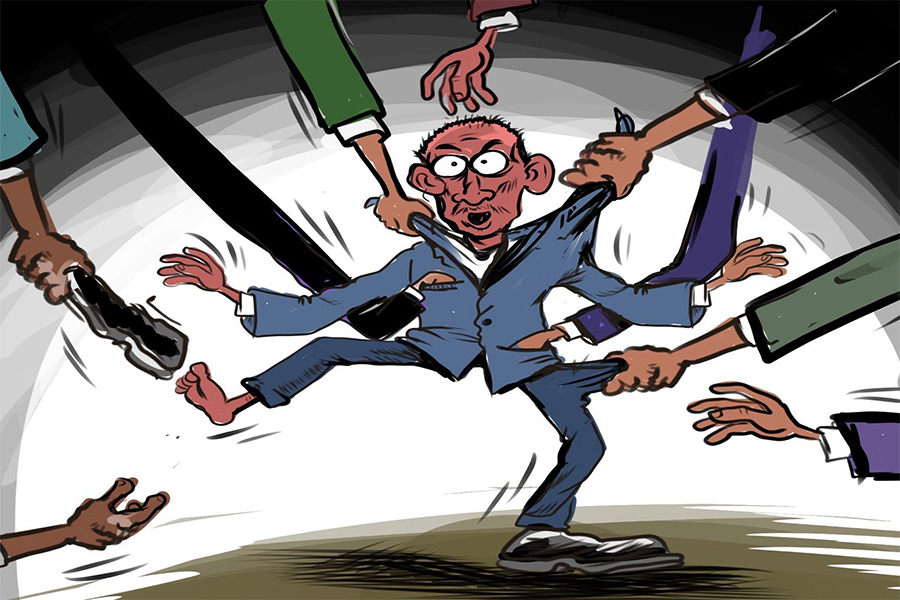
The federal budget tells a troubling story about inflation, debt and reform. The prob...
May 9 , 2026
The Ethiopian state appears to have discovered a fiscal instrument that is politicall...
May 2 , 2026
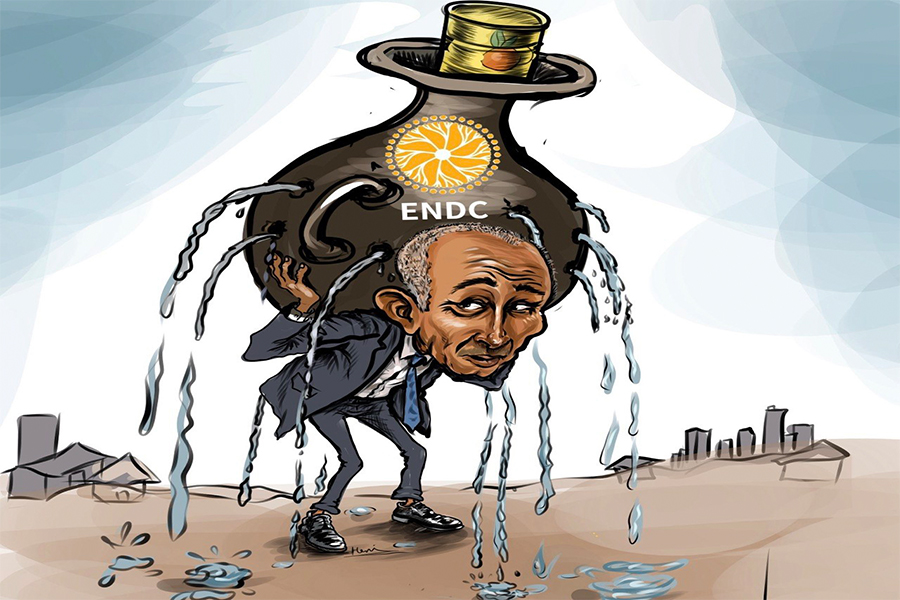
By the time Ethiopia's National Dialogue Commission (ENDC) reached the end of its fir...
Apr 25 , 2026
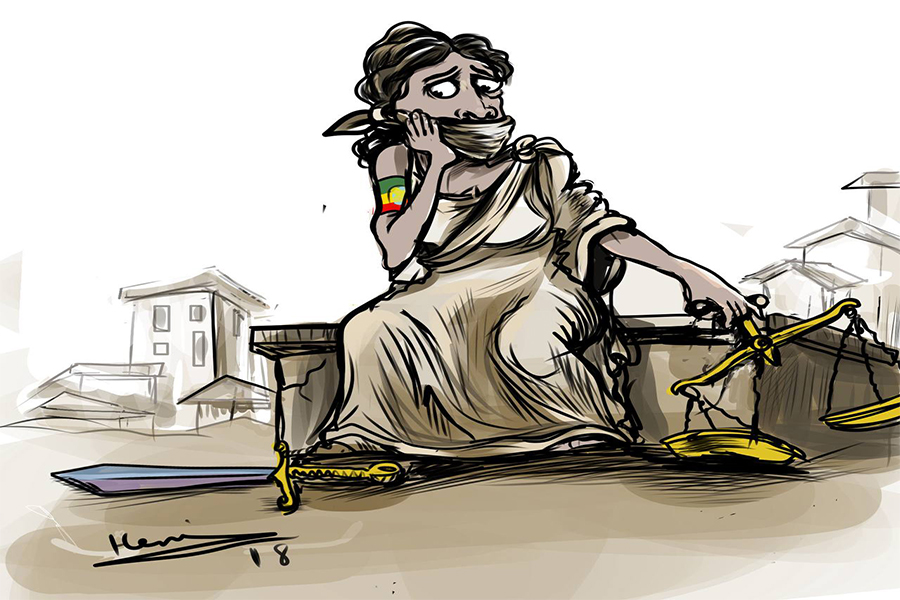
In a political community, official speeches show what governments want their citizens...
May 17 , 2026 . By NAHOM AYELE
A revised tax administration law could bar taxpayers from submitting new evidence dur...
May 17 , 2026 . By BEZAWIT HULUAGER
The federal government's plan to build a capital market begins where the financial sy...

May 17 , 2026 . By DAGIM SEIFE
The federal agency in charge of imports and distribution of medicines launched “Pro...
May 17 , 2026 . By NAHOM AYELE
The Federal Supreme Court's interim order late last week has turned a technical tax d...





 Loading your updates...